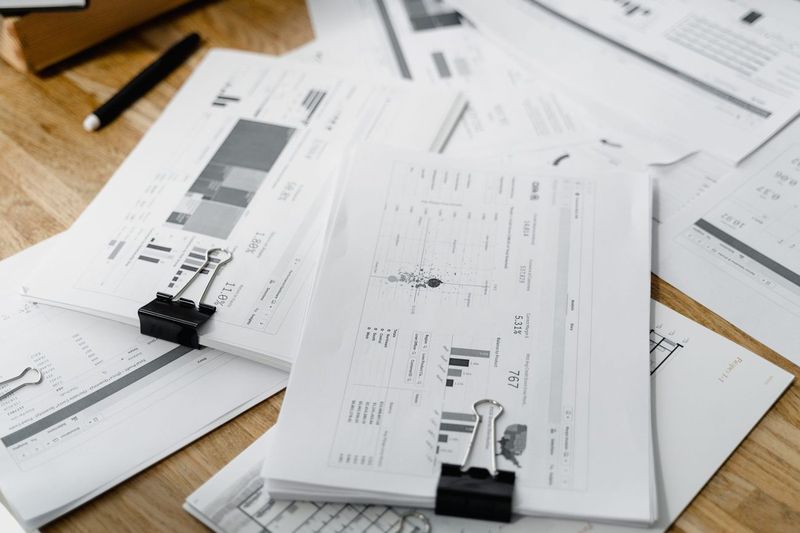
The electric bill sat on the counter next to the salt shaker for three days before I opened it. That is not unusual in our house. What was unusual is that when I finally did, I sat down with a pencil, the green notebook and a cup of coffee that went cold, and I read every single line.
We have paid this bill since May 1999, when Greg and I bought our split-level in Franklin. That is 26 years of writing a number in the notebook and never asking where it came from. With both kids out of the house and me thinking hard about when I might leave the school office, I decided it was time to understand the thing.
Our February bill was $132.58 for 864 kilowatt-hours. Here is what that number is made of.
The two halves of the bill
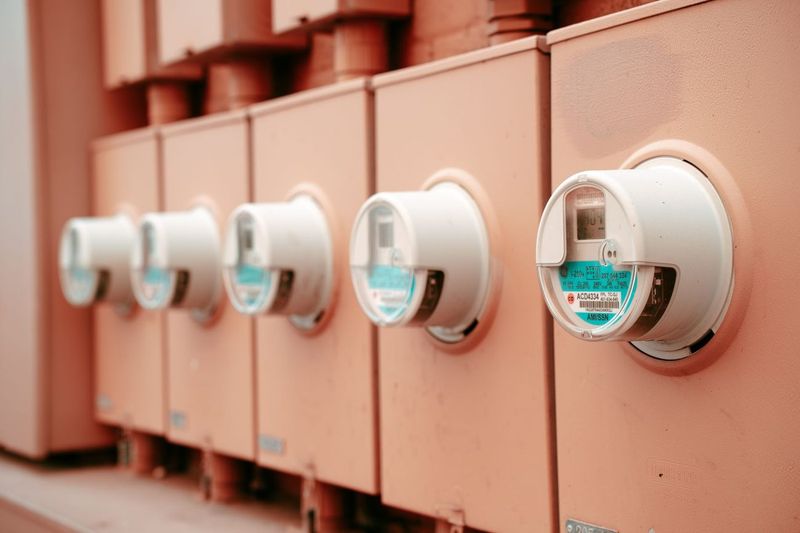
The first thing I learned is that our bill is really two bills stapled together. Our utility owns the poles and wires and delivers the power to our house. But in Ohio, the electricity itself, the part that gets generated at a power plant somewhere, can come from a different company. If you never pick one, the utility buys it for you at its standard rate and passes it through.
So the bill has a supply side and a delivery side. Once I saw that, the rest started making sense.
- Generation: $82.08. This is the electricity itself. It is the biggest piece by far, a little under ten cents for every kilowatt-hour we used.
- Transmission: $9.50. Moving power over the big high-voltage lines from the plant toward our area.
- Distribution: $29.80. Getting it the last few miles down our street and into the house. This includes a flat customer charge of $10.00 that we pay even if we use nothing at all.
- Riders: $11.20 total. Five or six small lines, some under a dollar, for things like grid upgrades, efficiency programs and other approved costs.
Add those up and you get $132.58. I checked twice. Old habits from the school office die hard.
The riders
Riders were the part that annoyed me at first. They sound like something sneaked in. What I found when I looked them up is that they are charges the state utility commission has approved for specific purposes, and they show up as separate lines so you can see them. That doesn't mean I love paying them, but they aren't hidden fees in the way I assumed. They are also not something I can shop around, because they belong to the delivery side.
The same goes for distribution and the customer charge. Whoever supplies our electricity, our utility still delivers it and still sends the bill. Those charges stay no matter what.
The little line I had never noticed
Down near the bottom, in small print, was a line called "price to compare." Ours said 10.6 cents per kilowatt-hour. I had walked past that line for years.
Here is what it means, as best I understand it. That number is what the utility's default supply is costing us per kilowatt-hour for the generation and transmission part. If a different supplier offers to sell us electricity, that is the number they need to beat for us to save anything. It is printed right on the bill so you can hold it up against an offer.
I did the arithmetic. 864 kilowatt-hours times 10.6 cents is $91.58, which is exactly the generation and transmission lines added together. That was a small thrill, I'll admit. Greg looked up from his crossword and said, "You're smiling at the electric bill." I was.
So roughly 69 percent of our bill is the part we could, in theory, shop. The other 31 percent is delivery, and that stays with the utility.
What I'm doing with this
I'm not switching anything yet. I don't know enough. But I went back through the green notebook and added up last year: about 10,900 kilowatt-hours for the year. If the supply side really is close to 10.6 cents, then every penny per kilowatt-hour we could knock off is worth about $109 a year to us. That is not nothing for a house about to live on less.
I also learned that the state keeps a comparison chart of supplier offers, and that you can read your account number and usage history right off the bill. Those are next on my list. So is figuring out which offers are fixed and which can change month to month, because I have heard stories from people at work about rates that doubled.
A few things I wish someone had told me years ago:
Look at kilowatt-hours, not just dollars. Our dollars went up last winter, but our usage did too, because Josh was home over break with his gaming computer.
Find the price to compare line. It is the only number you need when somebody knocks on the door or calls with a deal.
And keep the bill. The green notebook has every one since 2003, and for the first time it is going to earn its shelf space.
If you've never read yours line by line, pour a coffee and try it. Mine took about forty minutes, and I understand our house a little better for it.