The thermostat in our upstairs hallway has two sets of fingerprints on it, and they do not agree. Greg likes 74 degrees. I like 77. For as long as we've been married we have handled this the way most couples do, which is to quietly change it when the other person isn't looking.
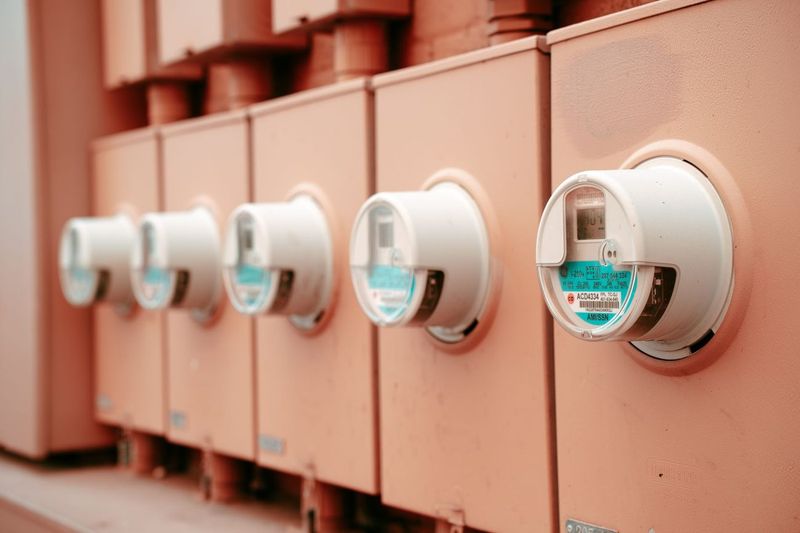
Then the August electric bill came, and it was $214.
Looking at the bill first
Before I blamed anybody, I did my usual thing with the green notebook. The billing period ran from July 9 to August 7, and we used 1,598 kilowatt-hours. In April we used 742. The difference between those two months is almost entirely the air conditioner, because we heat with gas and nothing else in the house changes much in summer.
The good news is that our new supplier rate kicked in this summer. We're paying 8.9 cents for the supply portion instead of the utility's price to compare of about 10.6. At 1,598 kilowatt-hours, that's about $27 we would have paid otherwise. So $214 would have been about $241. That helped my mood a little.
All in, with delivery and riders, we're paying a bit over 13 cents for every kilowatt-hour. That's the number that matters when you're deciding what a degree on the thermostat is worth.
What a degree is worth
The figure you see quoted most often is that each degree you raise the thermostat in summer can trim cooling costs by roughly 3 percent, depending on the house and the weather. I don't treat that as gospel, but it gave me a place to start.
If roughly 860 of our 1,598 kilowatt-hours went to cooling, that's about $112 of the bill. Three percent of $112 is about $3.40 per degree, per month. So the gap between Greg's 74 and my 77 is worth about $10 a month in a hot July, and much less in a mild June or September.
I'll be honest. When I sat down with this, I thought I was going to win the argument by a landslide. Instead I found out we've been fighting over the price of a large pizza. Over a whole cooling season, maybe $30 to $35.
Why it still matters to us
Thirty dollars isn't nothing in a year when I've left my job and we're watching everything. But the real reason I cared was the habit. We're about to live on less money, and I'd like us to agree on the small stuff before it piles up. Greg, to his credit, listened to all of this at the kitchen table at 1:45 in the afternoon, still in his work shirt, and then said, "So 75."
So 75. That's where we landed, with a few details that made it work for both of us:
- 75 during the day, when it's mostly me in the house now.
- 74 from 7:30 p.m. to 3:30 a.m., because Greg goes to bed early and gets up at 3:40 for his route. A man who drives a delivery truck before dawn deserves to sleep cool. I wear socks.
- Ceiling fans on in whatever room is in use, and off when we leave it.
- Blinds closed on the west side of the house by 2 p.m.
Our furnace and AC were replaced in 2015, so the unit itself is in decent shape. I did change the filter, which was overdue, and Greg hosed off the outdoor unit. That's free.
The only member of the household who hasn't accepted the compromise is Biscuit, who has decided the vent in the family room is his personal property and lies on it like a draft stopper. Greg says the cat votes 74.
What I'll watch next
Josh is home until he moves into his apartment near campus on the 23rd, so September should drop a bit with one less person running fans and a computer all night. I'll compare the September bill against this one and against last year's in the notebook. Last August was $231 at the old rate with Josh home the whole time.
If you're in the same thermostat argument, my only advice is to figure out your own cents-per-kilowatt-hour first. Take your total bill, divide by the kilowatt-hours, and then do the 3 percent math. It turns a fight about comfort into a conversation about a number, and numbers are easier to split down the middle.
It's 75 right now. I can see it from where I'm sitting. I'm watching for fingerprints.